
The Hand
Behind the Fibres
Moumita Guha — Contemporary Fibre Artist, Educator, and Oxford Certified Rug Hooking Instructor.
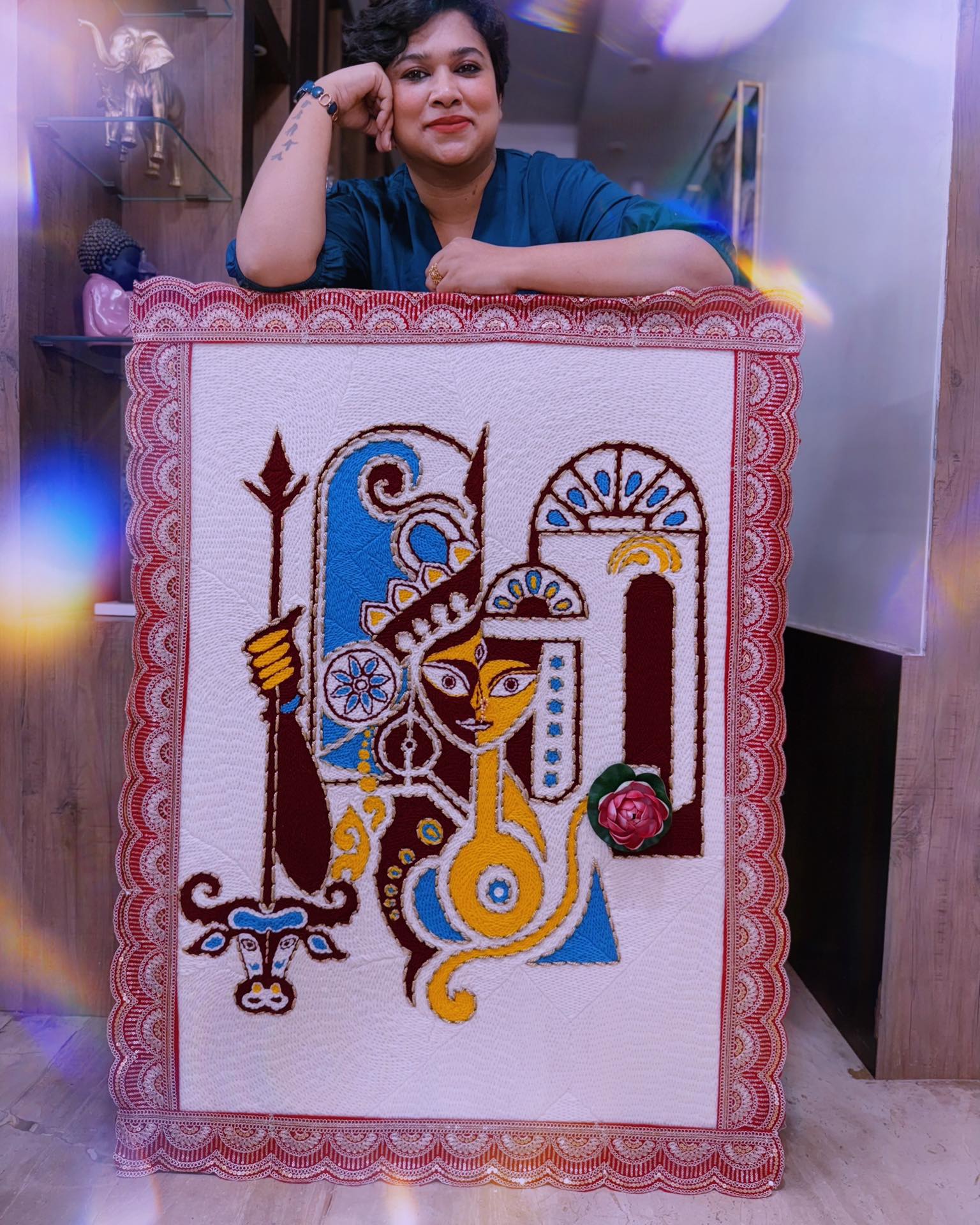
Moumita Guha is a contemporary fibre artist based in India, whose practice gently blurs the lines between painting, sculpture, and textile heritage. Trained in disciplines as varied as punch needle art, needle felting, wool painting, rug hooking, and Russian sculpture painting, she has built a body of work that is unmistakably tactile, deeply considered, and unhurried in its making.
Her studio is a place of small, deliberate gestures — a punch needle threading down through linen, raw fleece pressed into shape under hundreds of repeated barbed-needle strokes, a hooked loop pulled to exactly the right tension. Out of these gestures emerge works that feel less like compositions and more like landscapes — soft, sculptural, and quietly alive.
Practice
What Drives the Work
She draws from gardens that bloom slowly, from the texture of monsoon light on old walls, from her grandmother's hands, from the architecture of petals and the weight of cloth. Her philosophy is simple: slow art, made with full attention, can hold more than it appears to.
Where painting captures a moment, fibre art remembers it. Where sculpture occupies a space, fibre art warms it. Moumita's work sits at this generous intersection — a fine-art practice that asks to be lived with, not only looked at.
Slow art, made with full attention, can hold more than it appears to.
From Sketch to Surface
Every work begins in silence — a sketch, a swatch, a small piece of dyed roving held up to the light. Colour comes first, then composition, then the slow translation of vision into fibre.
Some pieces take days; others, weeks. Each one is built in layers — punched, felted, hooked, sculpted — until the surface no longer feels made, but grown.
Until the surface no longer feels made — but grown.
Inside theWorkspace
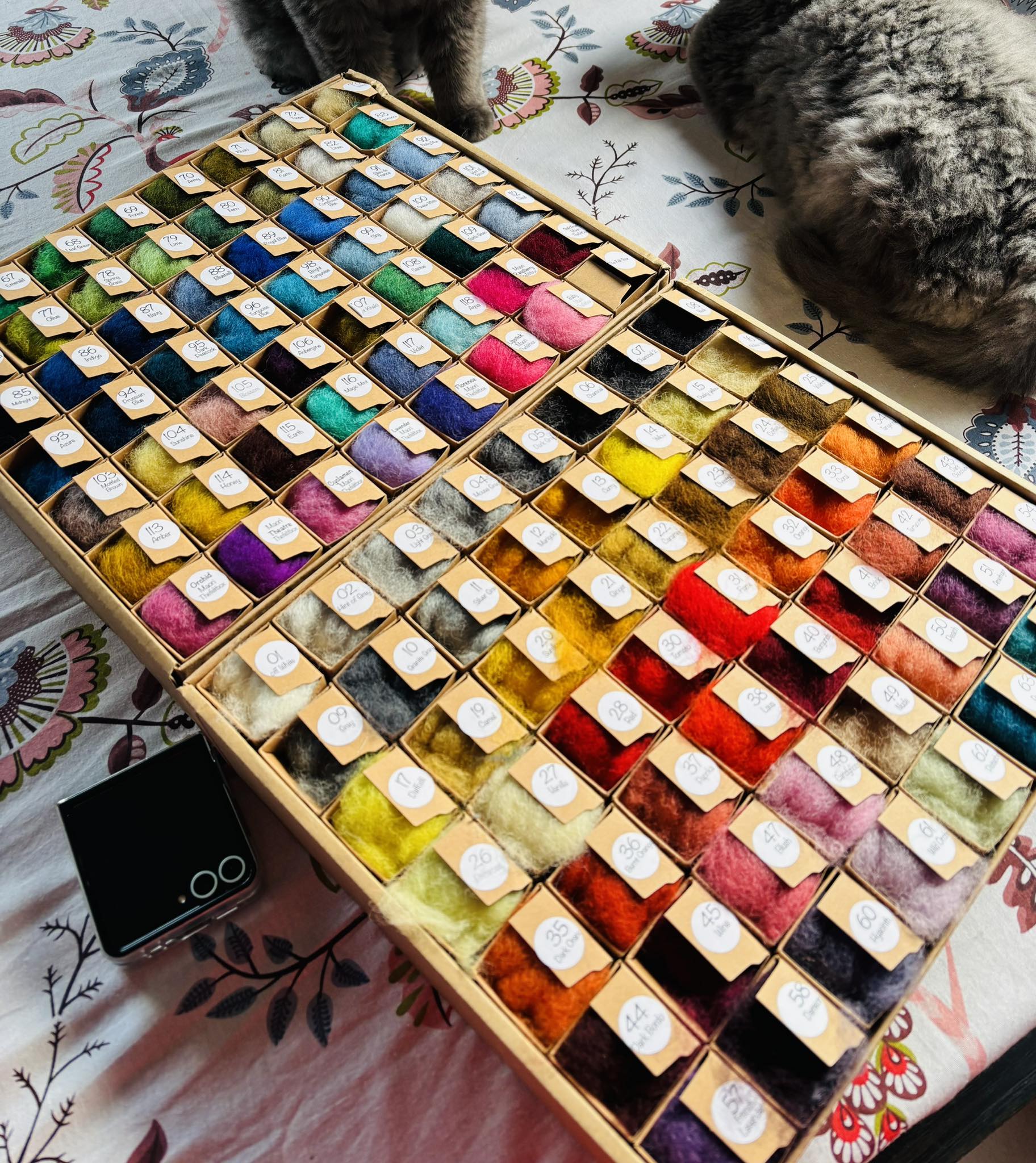
Her studio smells of wool, beeswax, and brewed tea. Skeins of dyed yarn hang like a colour library along one wall. Linens stretch across wooden frames. Light moves slowly across half-finished works.
Tools are kept close: punch needles in a ceramic cup, felting needles in a wooden block, hooks arranged by gauge. It is a room of patience — a working studio that doubles as a teaching space when students arrive.
What Lies
Ahead
Moumita's vision is to bring fibre art into the contemporary fine-art conversation — to see it framed, exhibited, collected, and lived with on equal footing with paint, bronze, and stone. She is equally committed to teaching: building a generation of fibre artists in India and beyond, one careful workshop at a time.
Recognition
Collected
Next Generation
Beyond